Botox, Dysport, Jeuveau, Xeomin, Letybo and Daxxify: The Complete Guide to Today’s Neuromodulators

Botox vs Dysport vs Jeuveau vs Xeomin vs Letybo vs Daxxify
An evidence-based guide to what actually differs
At TRUE, wrinkle relaxers are never treated like interchangeable commodities. Though they all belong to the same broad family, but they are not identical products, they are not dosed the same way, and they are not all FDA-approved for the same aesthetic areas. That distinction matters.
As of March 18, 2026, the six FDA-approved botulinum toxin type A products for aesthetic use in the United States are:
Botox Cosmetic (onabotulinumtoxinA)
Dysport (abobotulinumtoxinA)
Jeuveau (prabotulinumtoxinA-xvfs)
Xeomin (incobotulinumtoxinA)
Daxxify (daxibotulinumtoxinA-lanm), and
Letybo (letibotulinumtoxinA-wlbg).
With Relfydess (RelabotulinumtoxinA) and TrenibotE (TrenibotulinumtoxinE) planning to launch as soon as this year.
The current FDA approved neuromodulators all reduce muscle activity by interrupting acetylcholine signaling at the neuromuscular junction, but they differ in formulation, excipients, approved indications, clinical development programs, and practical treatment characteristics.
The most important rule before comparing any of them: their units are not interchangeable. A “unit” of one toxin cannot be directly converted into a “unit” of another using a universal ratio, because each manufacturer uses its own proprietary assay and formulation process. That is why good injectors think in terms of anatomy, muscle strength, treatment goals, and product behavior, not simplistic unit conversion charts.
What they all have in common
All six are botulinum toxin type A products used to soften dynamic lines by reducing repetitive muscle contraction. In aesthetics, that most often means frown lines, forehead lines, crow’s feet, neck banding, or other off-label facial balancing uses depending on product, anatomy, and injector judgment. Common class warnings also apply across products, including the boxed warning about rare possible distant spread of toxin effect.
That said, “same class” does not mean “same experience.”
The fastest high-level summary
Botox Cosmetic is the first to market, most established brand familiarity, and the one with the broadest U.S. aesthetic label, including glabella, forehead, crow’s feet, and now platysma bands.
Dysport is often chosen when a clinician wants a product known for broader diffusion characteristics and a fast clinical onset, especially for larger upper-face areas, and potentially longer duration.
Jeuveau is the aesthetic-only brand in the group. Recent real-world and clinical data support fast onset, and newer high-dose data suggest duration can extend further when dose is increased. It is also clinically more precise than its competitor.
Xeomin is the purified core neurotoxin without complexing proteins, which is why it is often called the “naked” toxin. It has long been favored in conversations about immunogenicity, although recent literature is more nuanced than older marketing claims that any single product is automatically “best” for antibody risk in every aesthetic scenario.
Daxxify is differentiated by its peptide excipient, RTP004, and by longer median duration in glabellar-line studies, which is the main reason it is often discussed as a “fewer appointments per year” option.
Letybo is the newest U.S. entrant. It is FDA-approved for glabellar lines, with phase 3 data supporting efficacy, safety, patient satisfaction, and noninferiority to onabotulinumtoxinA in a large controlled trial outside the U.S.
Product-by-product: what is actually different
1) Botox Cosmetic (onabotulinumtoxinA)

Botox remains the best-known name in the category and the product many patients use as shorthand for wrinkle relaxers in general. That brand recognition matters, but from a clinical perspective the more important point is that Botox has the broadest U.S. aesthetic label in the group. Its current FDA-approved aesthetic indications include moderate to severe glabellar lines, lateral canthal lines, forehead lines, and platysma bands in adults. The platysma-band approval was added in October 2024, making Botox Cosmetic the first and only U.S. aesthetic neurotoxin with four labeled aesthetic indication areas and the first in its category to extend beyond the face to the neck.
That breadth of labeling is part of why Botox is so often described as the “reference” product in aesthetic practice. It has the deepest name recognition, a long safety record, and the most expansive consumer familiarity.
Where Botox stands out
Botox stands out less because it is radically different in mechanism and more because it is the most established benchmark with the broadest U.S. aesthetic label.
Practical takeaway
If you want the product with the most expansive U.S. aesthetic approvals, Botox is still the anchor product in the category.
2) Dysport (abobotulinumtoxinA)

Dysport is the product many clinicians reach for when they want a toxin known for broader spread characteristics and often a faster visible onset. The literature supports the idea that Dysport often shows early visible effect quickly. A systematic review of abobotulinumtoxinA for aesthetic use reported onset commonly within 2 to 3 days in upper-face treatments, and newer phase 3 data with ready-to-use abobotulinumtoxinA solution also support efficacy and sustained patient satisfaction over time.
Where Dysport stands out
Its most meaningful differentiator is not that it is “stronger” or “better,” but that many clinicians consider it helpful when they want somewhat broader field effect in larger upper-face regions. That may be useful for certain forehead patterns, certain male foreheads, some full-upper-face balancing patterns, and some intradermal or broader-field approaches. The tradeoff is that broader spread can be helpful in the right hands and less forgiving in the wrong area or technique.
Practical takeaway
Dysport is often attractive for patients wanting fast onset and for injectors treating larger treatment fields, but the “more diffuse” reputation is a feature only when it matches the anatomy and treatment plan.
3) Jeuveau (prabotulinumtoxinA-xvfs)

Jeuveau is the only member of this group that launched in the U.S. as an aesthetic-only neurotoxin brand. Its FDA indication is for temporary improvement of moderate to severe glabellar lines in adult patients.
At TRUE, Jeuveau is described as a more modern neuromodulator with Hi-Pure manufacturing, a precision feel, faster onset, and relatively limited diffusion. That framing largely mirrors how the product is positioned in clinical aesthetics: highly aesthetic-focused, often favored by younger neuromodulator patients.
Jeuveau’s official consumer materials state that results can begin in as little as 2 days and can last up to 4 months. A 2024 real-world patient-experience study also found that for most patients treatment onset occurred in 2 to 3 days, with peak response around 7 to 10 days and high willingness to repeat treatment.
The product becomes even more interesting when discussing dose-response. In a 2024 phase 2 trial, 40 U prabotulinumtoxinA showed a median duration of effect of about 183 days, compared with 149 days for 20 U prabotulinumtoxinA and 148 days for 20 U onabotulinumtoxinA in glabellar lines. Higher-dose data suggest extended duration is possible.
Where Jeuveau stands out
Jeuveau’s strongest differentiators are duration studies, fast onset, and a reputation for targeted precision.
Practical takeaway
Jeuveau is a strong option for glabellar-focused cosmetic patients, especially when a practice values a fast aesthetic onset and highly cosmetic brand positioning.
4) Xeomin (incobotulinumtoxinA)
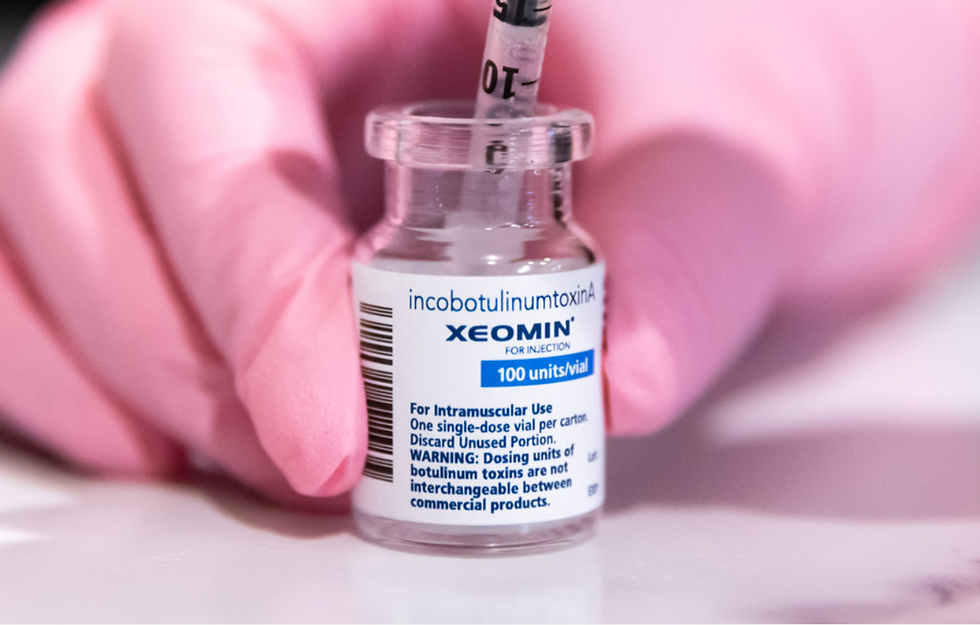
Xeomin’s defining feature is that it contains the core neurotoxin without complexing proteins. That is why it is often called the “naked” toxin. The manufacturer likewise describes Xeomin as developed using a process that removes complexing proteins.
This is where nuance matters. For years, the simplistic version of the Xeomin conversation was “no accessory proteins = lower immunogenicity = better long-term product.” The modern literature is more careful. A 2024 review raised the possibility that accessory proteins may not be biologically inert and could potentially influence neurotoxin activity. A 2024 review of complexing-protein-free formulations also notes that these products differ from each other in production protocols and excipients, which may affect immunogenicity, rather than proving a single, universal superiority claim.
So what can be said confidently? Xeomin is structurally distinct in lacking complexing proteins, and it has long-standing clinical use with low immunogenicity reported in practice and studies. What should not be said too confidently is that the absence of accessory proteins automatically makes it superior for every patient or that it guarantees resistance will not occur.
Where Xeomin stands out
Xeomin stands out most for patients and providers specifically interested in a purified core neurotoxin formulation. It is often part of the conversation when discussing repeated long-term treatment, higher cumulative exposure, or prior concern about waning response, even though that conversation should stay evidence-based and not oversimplified.
Practical takeaway
Xeomin’s clearest differentiator is formulation purity, not necessarily dramatically different cosmetic outcome at standard doses in every patient. It is often chosen for strategy and philosophy as much as for visible effect.
5) Daxxify (daxibotulinumtoxinA-lanm)

Daxxify is the most distinct formulation in the group because it is paired with a 35-amino-acid peptide excipient called RTP004. According to the prescribing information, that peptide helps prevent surface adsorption and promotes thermal stability. TRUE’s own description of Daxxify as “peptide powered” and longer-lasting is consistent with both the label and the phase 3 development program.
What has driven Daxxify’s market attention is duration. TRUE states that many patients enjoy results for up to 6 months, and clinical data support a longer median duration than the classic 3-to-4-month framing many patients associate with older toxins. The phase 3 program and pooled analyses showed sustained glabellar-line improvement, and Daxxify HCP materials cite that at least 50% of patients in SAKURA 1 and 2 maintained none or mild frown lines for approximately 24 weeks or longer by both investigator and patient assessments.
Immunogenicity has also been closely watched because of the novel peptide excipient. Published analyses from the phase 3 glabellar-line program found no neutralizing antibodies to daxibotulinumtoxinA, while some transient low-titer binding antibodies to toxin or RTP004 were observed without apparent loss of clinical effect.
A practical note: Daxxify’s U.S. aesthetic indication remains glabellar lines. It is not interchangeable with other toxins unit-for-unit, and its value proposition is mainly fewer yearly visits for the right patient, not universal superiority in every aesthetic use case.
Where Daxxify stands out
Longer duration is the headline. If a patient values fewer annual visits and is a good anatomic fit, Daxxify is often the most obvious candidate in this group.
Practical takeaway
Daxxify is the product to discuss when longevity is the top priority, but longevity still depends on dose, treatment area, muscle strength, and injector strategy.
6) Letybo (letibotulinumtoxinA-wlbg)

Letybo is the newest FDA-approved aesthetic toxin in the U.S. It was approved on February 29, 2024 for temporary improvement in the appearance of moderate to severe glabellar lines in adult patients.
A 2022 phase 3 placebo-controlled study found high efficacy and a convincing safety profile for glabellar lines. A 2024 phase 3 noninferiority randomized trial found letibotulinum toxin A noninferior to onabotulinumtoxinA for improvement of moderate-to-severe glabellar wrinkles, with no significant safety difference between groups.
A 2024 publication also reported meaningful improvements in psychological burden, younger perceived age, and treatment satisfaction across phase 3 trials.
Like Jeuveau, Letybo’s current U.S. aesthetic label is glabellar only. Also like the others, its units are product-specific and not interchangeable with other toxins.
Where Letybo stands out
Its biggest differentiator right now is not some dramatic proven superiority over the field, but the combination of being the newest U.S. entrant and having a respectable phase 3 evidence package, including noninferiority data versus onabotulinumtoxinA and positive patient-reported outcomes.
Practical takeaway
Letybo deserves to be taken seriously as a true peer in the glabellar-line category, even though real-world U.S. familiarity is still newer than with Botox, Dysport, Xeomin, Jeuveau, or Daxxify.
The questions patients ask most
Are they all “Botox”?
No. Patients often use “Botox” generically, but Botox is one brand. Dysport, Jeuveau, Xeomin, Letybo, and Daxxify are separate products with separate labels, separate manufacturing processes, and non-interchangeable units.
Is one objectively the best?
Not universally. The best product depends on the area being treated, how quickly you want onset, whether broader or tighter spread is helpful, whether longer duration matters most, prior response history, dose strategy, and injector technique. Even recent reviews emphasize that products are distinct and should not be treated as equivalent simply because they share a class.
Which one lasts the longest?
At standard consumer level, Daxxify has the strongest evidence for longer median duration in glabellar-line studies, often around the 6-month conversation. High-dose prabotulinumtoxinA studies also suggest that extended duration can be achieved in certain settings, but that is not the same as saying standard-dose Jeuveau routinely lasts 6 months.
Which one kicks in fastest?
Daxxify, ofthen the next day. Although, Dysport and Jeuveau are both also associated with faster visible onset, and Jeuveau’s official materials state results can start in as little as 2 days. Dysport literature also supports an early onset profile, often around 2 to 3 days.
Which one is best if I am worried about building resistance?
Xeomin is often favored in this discussion because it lacks complexing proteins, and complexing-protein-free formulations are an important category. But recent literature makes clear that immunogenicity is influenced by more than one variable, and the absence of accessory proteins alone should not be marketed as a guarantee. Daxxify’s phase 3 glabellar-line program also showed no neutralizing antibodies in published analyses.
The real bottom line
The biggest mistake in neuromodulator conversations is assuming all toxins are basically the same and only the price differs. That is not true. They all relax muscle, but they differ in what is FDA-approved, how they are formulated, how they spread, how fast they tend to show, how long they tend to last, and how an injector may strategically choose among them.
At TRUE, that is exactly why multiple options are offered rather than treating every face with the same product. The best toxin is not the one with the loudest marketing. It is the one that best matches your anatomy, treatment goals, timeline, movement pattern, prior history, and the injector’s strategy.


Comments